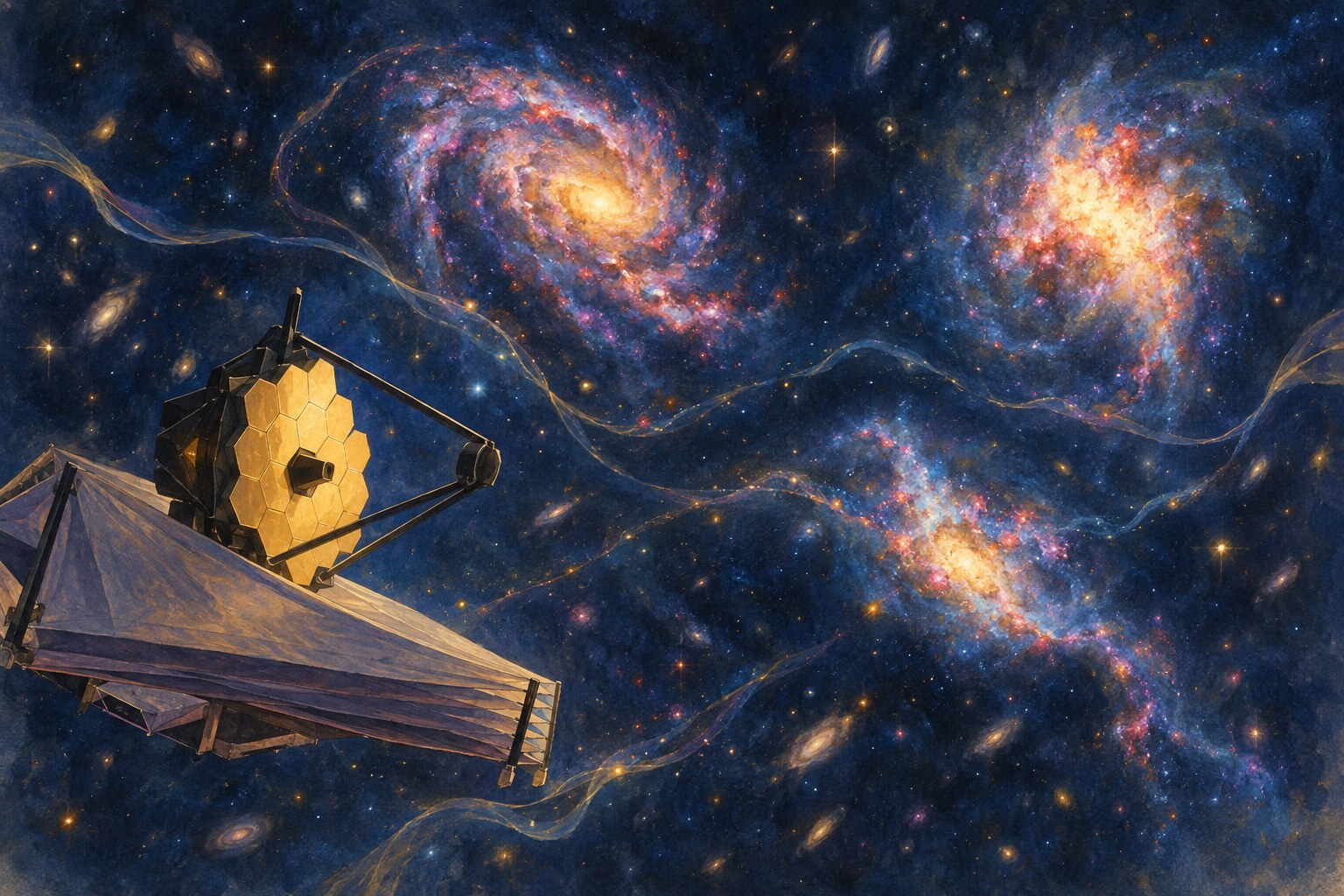
Astronomers at the University of Arizona studied three galaxies as they appeared about 500 million years after the Big Bang. Their light had traveled for more than 13 billion years before reaching Earth.
Using the infrared abilities of NASA's James Webb Space Telescope, the team spent nearly 30 hours examining faint patterns in the galaxies' light. The patterns showed carbon, oxygen, and silicon in gas around the young galaxies.
The elements were moving outward from the galaxies, suggesting that some of the universe's earliest galaxies were already spreading material that could later help form new stars and planets.
The study, published in Nature Astronomy, is based on three early galaxies, so it does not answer every question about the young universe. It does give astronomers a new view of how quickly galaxies began shaping the space around them.