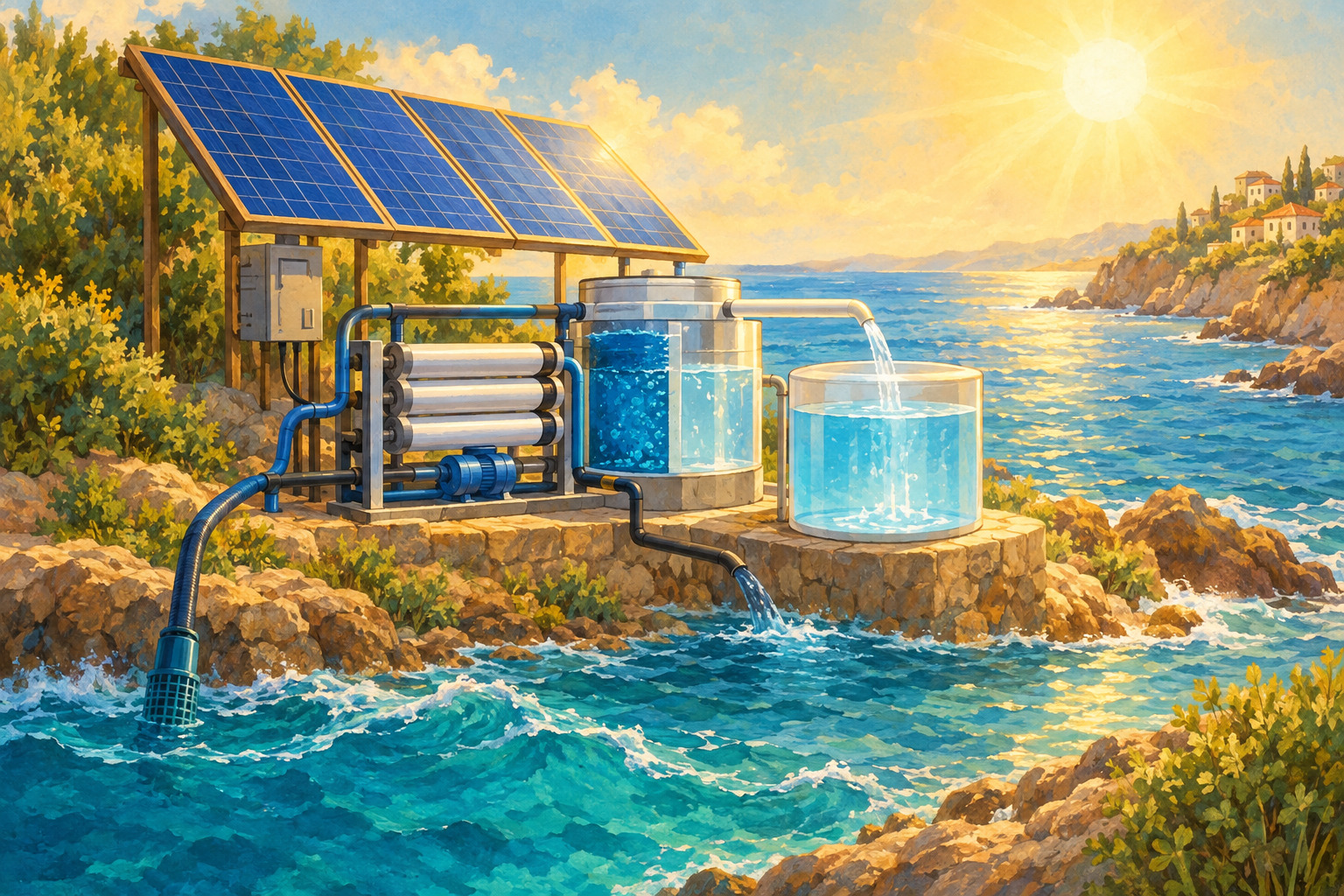
Researchers at the University of Rochester have developed a solar-powered way to make fresh water from seawater without sending concentrated liquid brine back into the environment.
The system uses a specially textured black-metal panel. Sunlight helps water evaporate, while a thin moving film carries crystallized salt away from the active surface and into a collection area.
In tests with real ocean water, the panel ran continuously for a week. The study reported about 74 percent solar-to-vapor conversion efficiency and nearly complete salt extraction.
The collected salts could become useful materials instead of waste. In related work, the team also recovered about half of the lithium in samples from Utah’s Great Salt Lake.
The work was described in the journal Light: Science & Applications and reported by the university on September 15.